De Angeli Prodotti among the examples "Europa elettrica": innovation, smart grids, and industry at the heart of the energy transition.
Electrification is no longer just a future scenario or one of the many objectives set by European energy policies. It is an industrial process already underway, destined to profoundly transform the way we produce energy, transport it through power grids, convert it in electrical machines, and use it in industrial processes and mobility. Transmission networks, transformers, high-efficiency motors, electric mobility, renewable energy generation, and the digitalization of infrastructure are becoming less and less separate worlds and increasingly parts of a single large system. It is precisely from this transformation that “Europa elettrica. Sfide industriali a confronto” begins, the volume published by Post Editori that analyzes the path towards electrification of the main European industrial systems through data, testimonies, and concrete case studies of manufacturing companies. Among the twenty companies selected to illustrate this transformation is De Angeli Prodotti, featured in the volume as an Italian industrial case directly connected to the electrification supply chain.
For us, this is a particularly significant recognition because the book does not simply focus on companies that are reducing their energy consumption or installing renewable energy systems. The central theme is much broader: understanding how electrification is transforming European industry, which technologies are making it concretely possible, and how decarbonization can become not only an environmental constraint, but also a driver of innovation, competitiveness, and industrial development. The volume compares Italy, Germany, France, and Spain, highlighting different production models, energy strategies, regulatory frameworks, and rates of transformation, while at the same time showing how the development of a more electrified energy system requires a strong, technologically advanced, and innovation-driven industrial supply chain. It is precisely within this transformation that the strategy of De Angeli Prodotti has been positioned for years.
Summary:
- 1. The electrification of Europe needs industry
- 2. From 1995 to today: growing by anticipating change
- 3. CTC and the efficiency of large transformers
- 4. More capable grids without rebuilding everything from scratch
- 5. From capacity to knowledge: the Smart Conductor
- 6. The energy transition must also take place inside the factory
- 7. Materials, supply chain and carbon footprint
- 8. An Italian case within a European challenge
1. The electrification of Europe needs industry
When discussing the energy transition, attention often focuses on generation sources: solar, wind, hydroelectric power and all the technologies expected to progressively reduce our reliance on fossil fuels. However, producing low-emission electricity represents only part of the challenge. That energy must be transmitted, transformed, distributed and ultimately used as efficiently as possible. The growth of renewable energy sources requires grids capable of managing energy flows that are more complex, variable and difficult to predict than in the past; rising electricity consumption requires greater transmission capacity; and the spread of data centers, electric mobility, heat pumps and new industrial processes calls for more efficient transformers, higher-performing motors and more resilient infrastructure. Behind these large systems are components that may appear largely invisible, but are absolutely essential to their operation.
Among these components are electrical conductors, and it is precisely within this part of the value chain that De Angeli Prodotti has progressively built its role. Over the years, our mission has become increasingly clear: to develop and manufacture modern conductors that can make a tangible contribution to the Energy Transition. This objective encompasses conductors for transmission grids, those used in power transformers, generators and electric motors and, more recently, applications related to electric mobility and power electronics. In our case, therefore, electrification is not simply a market trend to observe: to a large extent, it coincides with the evolution of the industrial sectors in which we operate.
2. From 1995 to today: growing by anticipating change
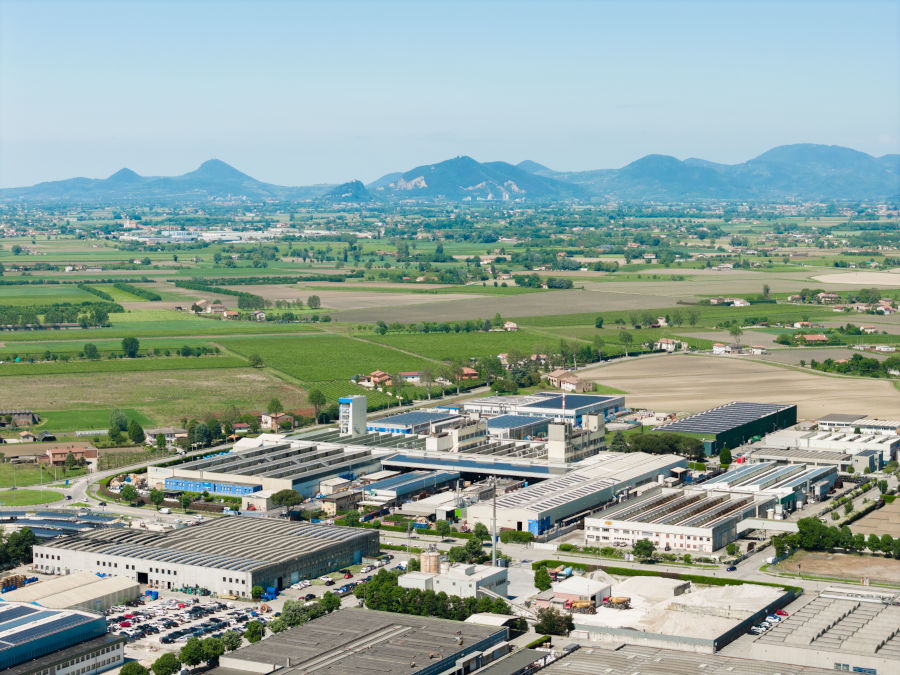
The case presented in Europa elettrica begins in 1995, when De Angeli Prodotti was a small industrial company based in the Veneto region, with a few dozen employees and operations focused on the production of conductors for large electrical machines and high-voltage overhead lines. Thirty years later, the picture is radically different: in 2025, the company reached around five hundred employees, revenues exceeding €300 million, and an industrial site that, through successive expansions, grew from approximately 43,000 to more than 104,000 square metres. These figures clearly describe the company’s growth in scale, but they tell only part of the story. Perhaps the most interesting aspect is the way this growth took place: not through a single major transformation, but through a succession of industrial and technological investments linked to the evolution of the energy system.
In the book, De Angeli Prodotti CEO Luca Mora describes this trajectory as follows:
“Growth developed with a certain consistency and gradualism“
It is an expression that effectively summarizes the approach followed over the years. In our industry, competitiveness does not depend solely on the ability to produce more metres or more tonnes of conductor, nor simply on reducing costs. It increasingly depends on the ability to understand, as early as possible, what performance levels will be required from the grids, transformers, motors and electrical infrastructure of tomorrow. In other words, it is necessary to anticipate the direction in which industrial demand is moving and to develop, in good time, the skills, equipment and materials needed to meet those requirements.
3. CTC and the efficiency of large transformers
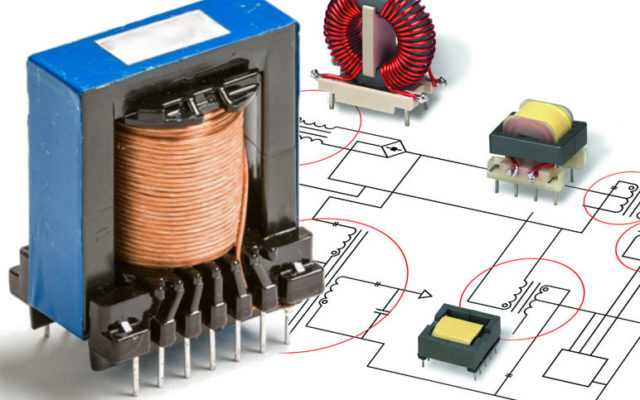
One of the most important milestones recalled in the book dates back to 2002, when De Angeli Prodotti decided to invest in CTC – Continuously Transposed Conductors, mainly intended for large power transformers. It was a technologically complex choice and, considering the size of the company at the time, a decidedly ambitious one. A CTC consists of numerous rectangular enamelled conductors that are continuously transposed along the cable, progressively causing each element to occupy the different positions within the cross-section. This particular geometry makes it possible to better distribute electromagnetic effects and reduce losses compared with less advanced configurations, thereby helping to improve winding performance.
It may seem like a detail reserved for specialists, but its impact needs to be understood on a much broader scale. Transformers are fundamental nodes in electrical grids: they support the transfer of energy between different voltage levels and remain in operation for very long periods. Even apparently marginal improvements in the efficiency of these components can therefore produce significant effects over their operating life. The investment in CTCs clearly reflects a defining feature of our industrial history: pursuing innovation even within mature components, by working on materials, geometries, insulation systems and manufacturing processes to make them more efficient and better suited to the evolving needs of the electrical system.
4. More capable grids without rebuilding everything from scratch
Another fundamental part of our business is directly related to energy transmission infrastructure, and it is precisely in the field of power grids that European electrification is creating some of the most complex challenges. To integrate increasing amounts of renewable energy and support electricity demand that is expected to grow, it will be necessary to build new infrastructure, but also to make better use of what is already available. Building a new transmission line requires substantial investment, permits, land availability and often long lead times. For this reason, reconductoring, meaning the upgrading of existing lines through the use of higher-performance conductors, is taking on an increasingly strategic role.
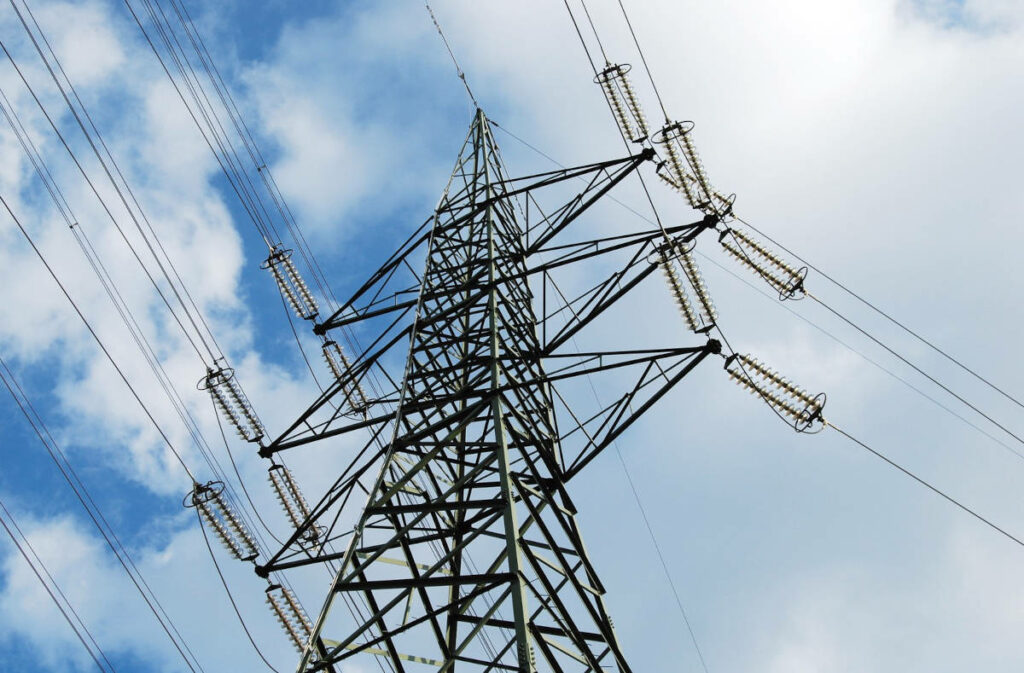
This need led to the development of HTLS – High Temperature Low Sag conductors and composite solutions such as ACCM, Aluminium Conductor Composite Multistrand. In these products, advances in materials science make it possible to overcome some of the limitations of traditional conductors: the use of carbon-fibre composite elements makes it possible to achieve support structures that are particularly lightweight and mechanically high-performing, while aluminium alloys suitable for high temperatures allow the transmission capacity of the line to be increased. The industrial principle behind these solutions is particularly relevant to the energy transition: increasing the amount of energy that can be transmitted does not necessarily mean rebuilding the infrastructure from scratch. In many cases, innovation in materials makes it possible to make better use of existing corridors, supports and infrastructure, increasing system capacity while at the same time limiting the impact of new interventions.
5. From capacity to knowledge: the Smart Conductor
Making a grid more powerful, however, is not enough. A power grid required to integrate large amounts of intermittent generation must also become smarter, more flexible and better able to monitor its own operating conditions. Electrical infrastructure has traditionally been managed by maintaining adequate safety margins against the most severe possible scenarios, an essential principle for ensuring the reliability of systems on which virtually every economic and social activity now depends. New technologies, however, make it possible to complement this approach with an amount of information that was simply unavailable in the past: continuous knowledge of what is actually happening along the line.
It is on this basis that De Angeli Prodotti developed the Smart Conductor, a solution that integrates optical fibre directly into the conductor, transforming what has traditionally been a passive element of the infrastructure into a potential continuous source of information. The ability to monitor parameters such as temperature, strain and operating conditions opens the way to more advanced line management, including applications related to Dynamic Line Rating, through which infrastructure capacity can be assessed on the basis of actual conditions rather than exclusively through static assumptions. The conceptual shift is significant: the conductor no longer serves only to carry current, but becomes part of a digital system in which electrical engineering, optical fibre, sensing technologies and data analysis converge. It is also one of the most concrete examples of the path towards servitization: moving beyond simply supplying a product and progressively developing integrated solutions around the customer’s operational needs.
6. The energy transition must also take place inside the factory
The account presented in Europa elettrica also highlights an apparent paradox that closely concerns our business. We manufacture components designed to make the energy system more efficient, more capable and more electrified, yet at the same time we are an energy-intensive industrial company. Drawing, rolling, enamelling, heat treatments, compressed air and large continuous production lines all require significant amounts of energy. For this reason, we have always considered it insufficient to address the energy transition only through what we sell: the same transition must progressively transform the way we produce as well.
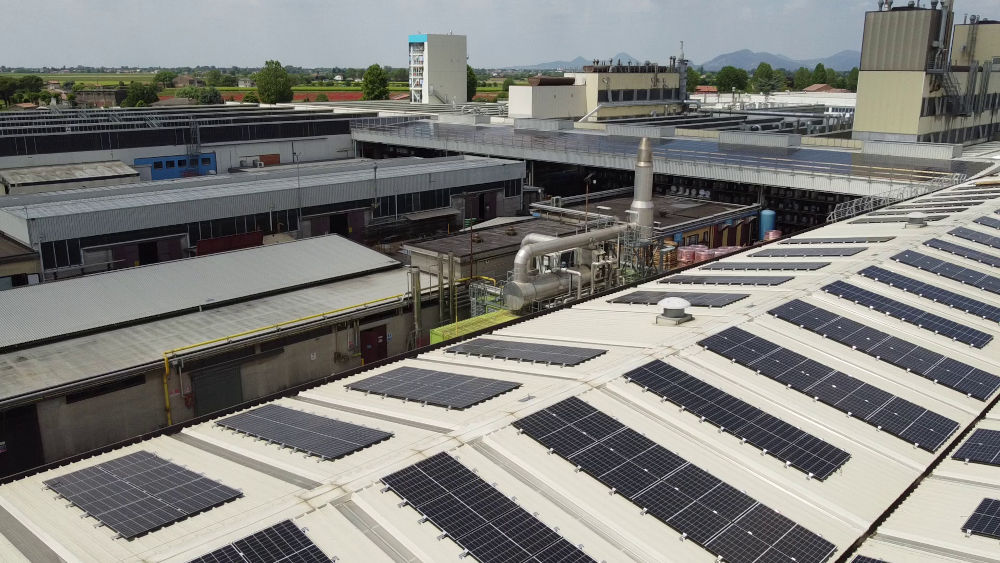
Over the years, we have therefore invested in energy efficiency, cogeneration, trigeneration and photovoltaic power generation. The development of solar energy is particularly representative of this journey: from the first systems installed in 2011, we have progressively covered the available roof space across the plant, increasing installed capacity from approximately 600 kWp to 2,500 kWp, with 4,200 panels and an expected annual production of around 2.75 million kWh. At the same time, we continue to focus on monitoring energy consumption and improving plant efficiency, because industrial sustainability cannot be achieved simply by replacing one energy source with another. Reducing specific energy consumption, improving processes and making better use of the energy available remain fundamental components of the decarbonization journey.
7. Materials, supply chain and carbon footprint
The same logic is progressively being incorporated into product design. The CARE – Carbon Reduced Emissions line, for example, was created with the aim of offering families of conductors characterized by a lower carbon footprint, while at the same time maintaining the performance required by industrial applications. This is an important step because the decarbonization of manufacturing cannot be addressed by looking only at the electricity consumed within the plant. The perspective must be progressively broadened to include raw materials, the supply chain, production processes, product lifespan and the performance they deliver throughout their entire operating life.
A more efficient conductor can help reduce energy losses for decades; a material with a lower carbon footprint, on the other hand, makes it possible to reduce the embedded impact even before the product enters service. These two dimensions must progress together. This is also why relationships with suppliers and partners are becoming an integral part of environmental strategies: the future competitiveness of industrial products will increasingly depend not only on their technical performance, but also on the ability to measure and reduce impacts throughout the entire value chain.
8. An Italian case within a European challenge
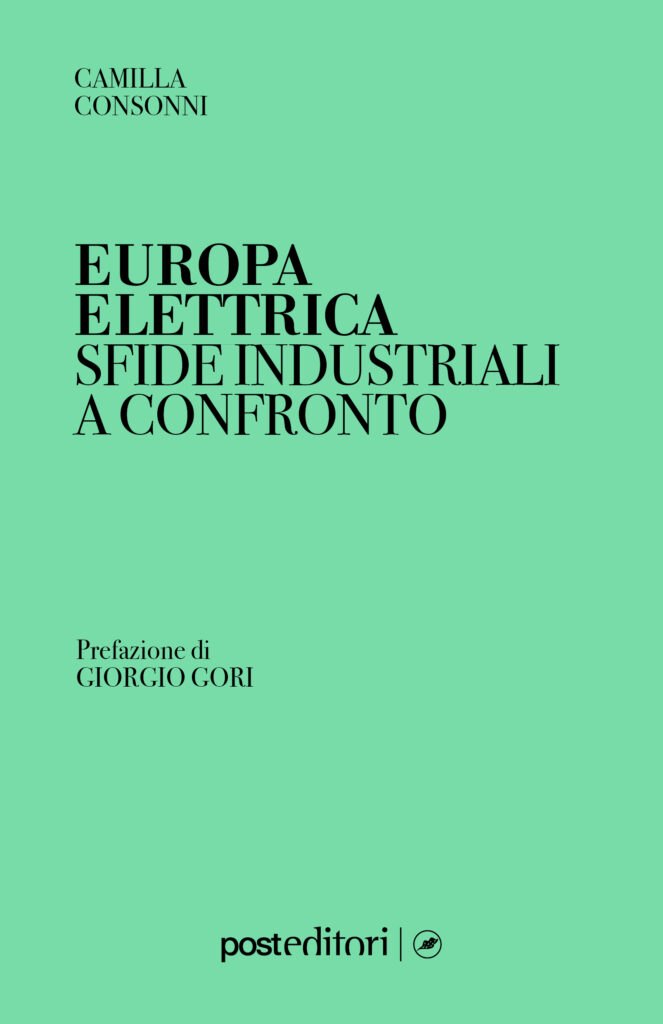
Being featured in Europa elettrica. Sfide industriali a confronto therefore has a significance for De Angeli Prodotti that goes beyond simply being included in a book. The volume compares different industrial systems, different energy choices and different rates of transformation in Italy, Germany, France and Spain, but above all it shows how the energy transition must be considered simultaneously as an environmental, industrial, technological and strategic issue. Europe will need to produce much more low-emission electricity, build and upgrade the infrastructure required to transmit it, digitalize power grids, make transformers and motors more efficient and, at the same time, preserve and strengthen its manufacturing capacity.
It is precisely within this space that we continue to work. From CTCs to HTLS conductors, from ACCM to the Smart Conductor, from high-technology conductors for transformers, motors and generators to investments in energy efficiency and self-generation at our plant, the common thread remains the same: trying to anticipate what the electrical system will need to become. The electrification of Europe is not an abstract project, nor will it be achieved through major policy statements alone. It will be built through grids, transformers, motors, materials, plants, people, skills and thousands of industrial innovations that, taken individually, may seem small but, when combined, will make a transformation of enormous scale possible.
We are therefore particularly proud that Europa elettrica chose to include the experience of De Angeli Prodotti within this journey: an industrial story that began in 1995 and has grown alongside an energy system that, today more than ever, is changing rapidly. And it is precisely this transformation that we continue to observe, study and address with the same principle that has guided many of our choices over the past thirty years: preparing for the future before it becomes the present.
The volume “Europa elettrica. Sfide industriali a confronto” is available on the Post Editori website.