The rise in electricity consumption driven by AI and digitalization makes Dynamic Line Rating, when integrated with solutions like De Angeli Prodotti’s Smart Conductor, an immediate strategic lever to intelligently, safely, and dynamically enhance existing grids in support of the energy transition.
The new digital economy comes with a growing energy cost. The expansion of data centers, the large-scale adoption of artificial intelligence, and the progressive electrification of industrial processes are structurally increasing electricity demand, which is already rising due to the overall evolution of human lifestyles. AI, in particular, requires high computing power, continuous operation, and always-on infrastructure. This translates into greater energy demand, concentrated in specific areas and less predictable than in the past. At the same time, governments and businesses are accelerating decarbonization and the integration of renewable sources, which are inherently variable. The result is an increasing tension between demand and transmission capacity. In this context, the challenge is not only to produce more energy but to make it available where and when it is needed, through smarter, more flexible, and higher-performing grids. Until the energy transition is complete, the use of DLR – Dynamic Line Rating to improve the performance of existing electrical networks becomes a fundamental strategic lever.
Indice:
- 1. Why do we need DLR?
- 2. From a conservative approach to a dynamic one
- 3. AI and critical grid loads
- 4. De Angeli Prodotti as a strategic partner
- 5. AI: from cause to enabler
- 6. Available assets as an acceleration tool
- 7. Conclusion: DLR as a lever for the energy transition
1. Why do we need DLR?
Existing infrastructure today represents the system’s critical point. As we have seen in this article on the evolution of transmission grids, Germany and Texas have adopted dynamic grid management to optimize the capacity of existing networks. This is because, although building new lines remains essential, it requires lengthy approvals and significant investments that cannot immediately meet the growing demand driven by digitalization. Therefore, it becomes an industrial priority to enhance what already exists. Dynamic Line Rating is designed precisely with this goal in mind: to increase the transmission capacity of the current grid using near-real-time data.
It is a concrete response to an immediate problem. If AI consumes more and digitalization increases overall electricity demand, the grid must evolve from a rigid structure to a dynamic system. In short, DLR enables this evolution without waiting for the inevitably longer timelines of constructing new physical infrastructure.
2. From a conservative approach to a dynamic one
For decades, line capacity has been defined by conservative static limits based on the worst-case environmental scenario. While this approach certainly ensured safety, today it risks limiting operational efficiency in an era where that is no longer acceptable. Under many real-world conditions, a line could safely carry more energy thanks to natural cooling, especially when wind is present. Dynamic Line Rating leverages this latent capacity by updating the rating according to actual conditions. Systemically, this means increasing available capacity, reducing congestion, and better supporting growing digital demand. In a historical phase where every transferable megawatt has strategic value, moving from a static to a dynamic approach is no longer optional: it is a necessity for industrial continuity and regional competitiveness.
3. AI and critical grid loads
When we talk about AI, we are talking about critical electrical loads with specific and very demanding demand profiles. Training, inference, cloud services, and advanced industrial automation require continuous power, high-quality margins, and available capacity even during peak periods. The trajectory is already measurable: according to the IEA, electricity consumption by data centers is expected to grow sharply, doubling by 2030 to around 945 TWh, largely driven by AI. This increase is not only quantitative but also qualitative, as it concentrates demand in geographic nodes where the grid may already be congested.

From an electrical engineering perspective, the critical issue is not only the amount of energy available, but how it is delivered: continuity, voltage stability, congestion management, and the ability to dispatch or allocate power in real time. Any discontinuity or transmission constraint can propagate economic effects throughout the entire digital supply chain, resulting in reduced computational throughput, service delays, operational inefficiencies, and higher indirect system costs. In a data-driven economy like this, the electrical grid becomes an enabling infrastructure on par with connectivity and computing.
Dynamic Line Rating (DLR) becomes an immediate infrastructural lever because it allows the useful capacity of existing lines to be increased by updating the rating based on actual conditions, rather than relying on conservative static limits. NREL highlights this point: DLR can improve transfer capacity, reliability, and cost-effectiveness of the grid without waiting for the long timelines required for new construction. Technically, the value comes from the conductor’s dynamic thermal balance: when convective cooling is favorable, the line can safely carry more current while keeping thermo-mechanical constraints within limits.
The decisive step is to integrate DLR with distributed monitoring and advanced analytics. Here, the deep digitalization proposed by De Angeli Prodotti with the Smart Conductor strengthens operational robustness: continuous measurements along the line (temperature, strain, dynamic signals) reduce the uncertainty of point-based models and improve data quality for dispatching. If digitalization increases electricity demand and sensitivity to service continuity, then investing in dynamic rating and advanced observability means building the energy foundations for digital growth in a scalable, resilient, and industrially sustainable way.
4. De Angeli Prodotti as a strategic partner
De Angeli Prodotti assumes a strategic role because it does not treat DLR as an isolated software module, but as an integrated architecture where the physical component, distributed sensors, and advanced analytics work as a single line operating system. In De Angeli Prodotti’s model, the difference compared to traditional DLRs is clear: instead of relying on selected measurement points and subsequent interpolation, the Smart Conductor enables direct, continuous measurement along the entire length of the conductor. This approach reduces blind spots, limits approximations, and improves the fidelity of the data used to calculate real-time transmission capacity.
The collected data is sent to a central system that processes it with advanced algorithms, producing a dynamic rating that more accurately reflects the line’s actual condition. The system enables extended operational awareness: real-time monitoring of line conditions, support for anomaly detection (including electrical arcs and imbalances), ice monitoring via load and weather sensors, abnormal vibration control, faster fault detection and localization, and infrastructure health analysis over time. In practice, the line becomes observable both in its electrical and mechanical behavior, delivering direct benefits for safety and operational continuity.
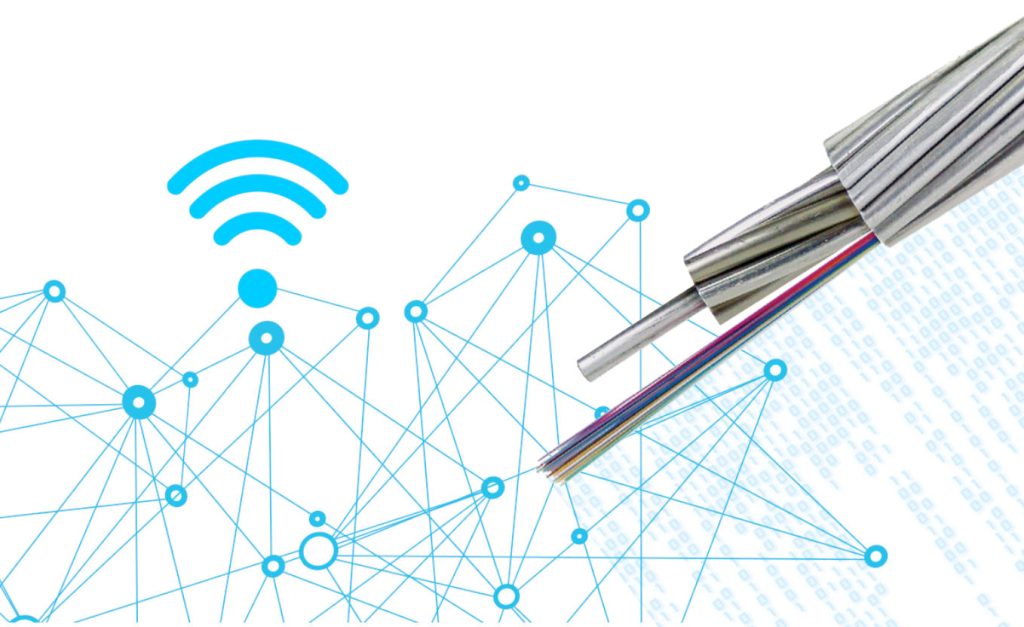
For utilities and operators, the industrial value translates into five concrete outcomes: optimized use of existing infrastructure, reduced operational risks, better integration of intermittent renewables, lower losses, and faster decision-making in control rooms thanks to updated and contextualized data.
With distributed measurement, the operator can more promptly identify thermal and mechanical phenomena along the line, better manage safety margins, and intervene with more precise priorities. This improves the balance between performance and asset protection. If demand grows due to AI, it is not enough to simply “push more” through the grid: it must be done with physical awareness and continuous control. In this sense, digitalization is not an informational layer separate from the electrical asset, it is part of the asset itself. De Angeli Prodotti leverages this convergence and translates it into practical applications for daily operations.
5. AI: from cause to enabler
Artificial intelligence, when applied to the grid, further amplifies the benefits of DLR. Algorithms can process large volumes of operational data, recognize patterns, anticipate critical issues, and support faster decision-making. This shifts maintenance from a reactive approach, focused on events that have already occurred, to predictive maintenance, oriented toward prevention. This means reducing unplanned outages, optimizing operational costs, and increasing overall reliability. At a time when AI is both the cause of increased consumption and a tool to better manage it, the strategic coherence is clear: use digital intelligence to make the very infrastructure powering the digital revolution more efficient.
6. Available assets as an acceleration tool
From an industrial perspective, the combination of DLR and the Smart Conductor provides a pragmatic response to the energy urgency of digitalization, thanks to a measurable increase in the useful capacity of the existing grid, accompanied by greater visibility, risk governance, and data quality. It represents a logic of responsible acceleration: doing more with available assets while maintaining safety and service continuity. For energy decision-makers, this approach allows better management of the present while planning future structural investments. For regions, it means supporting economic growth and technological innovation without having to rely solely on new infrastructure projects.
7. Conclusion: DLR as a lever for the energy transition
In conclusion, AI is reshaping global electricity demand, and digitalization is increasing the system’s energy requirements. Ignoring this link would mean underestimating the real bottleneck of the transition: transmission capacity. Dynamic Line Rating today represents a concrete lever to strengthen the existing grid within timelines compatible with the pace of digital change. De Angeli Prodotti, with its technological vision and industrial positioning, positions itself as a strategic partner in this transformation: not just product innovation, but intelligent infrastructure, reliable data, and long-term operational support. It is on this integration of energy and intelligence that competitiveness will be decided today and in the years to come.