Oil crisis and energy transition: impacts, challenges, and technological solutions for a resilient and sustainable energy system.
The history of energy is marked by moments of discontinuity. Wars, economic shocks, and geopolitical tensions have often acted as detonators for profound transformations, accelerating processes that under normal conditions would have taken decades. The recent oil crisis, fueled by instability in the Middle East and new supply dynamics, fits perfectly into this tradition.
Today, the price of Brent has steadily exceeded 100 dollars per barrel, reaching up to 125 dollars at the end of March 2026, while European natural gas (TTF) has reached its highest levels of the past year. This scenario does not represent just a cyclical crisis, but a structural signal: the energy model based on fossil fuels is showing its limits ever more clearly.
In this context, a question emerges forcefully: can the oil crisis truly accelerate the energy transition? The answer, as often happens in complex systems, is not linear. But it is precisely within current contradictions that the directions of the future can be glimpsed.
Indice:
- 1. The return of volatility: oil, gas, and energy markets under pressure
- 2. Energy transition: slowdown or restart?
- 3. The contradictions of the crisis: between a return to coal and technological innovation
- 4. The raw materials knot: a challenge for the transition
- 5. Power grids: the true battlefield of the transition
- 6. The strategic role of De Angeli Prodotti’s advanced conductors
- 7. Towards a new energy paradigm: resilience, decentralization, and digitalization
- 8. Conclusion: from crisis to opportunity
1. The return of volatility: oil, gas, and energy markets under pressure
The current energy crisis is characterized by extreme volatility that is hitting the heart of Europe hard. In Italy, the PUN Index (GME) recorded a significant surge, reaching 143.40 €/MWh, an increase of nearly 29 €/MWh compared to previous periods. This dynamic is not isolated: the main European power exchanges are following the same trend, with increases ranging between +3 and +19 €/MWh.
The main driver of these price increases is natural gas. The European TTF index reached 51.77 €/MWh, marking the highest value since March 2025, with peaks nearly touching 60 €/MWh on certain days due to tensions in the Middle East.
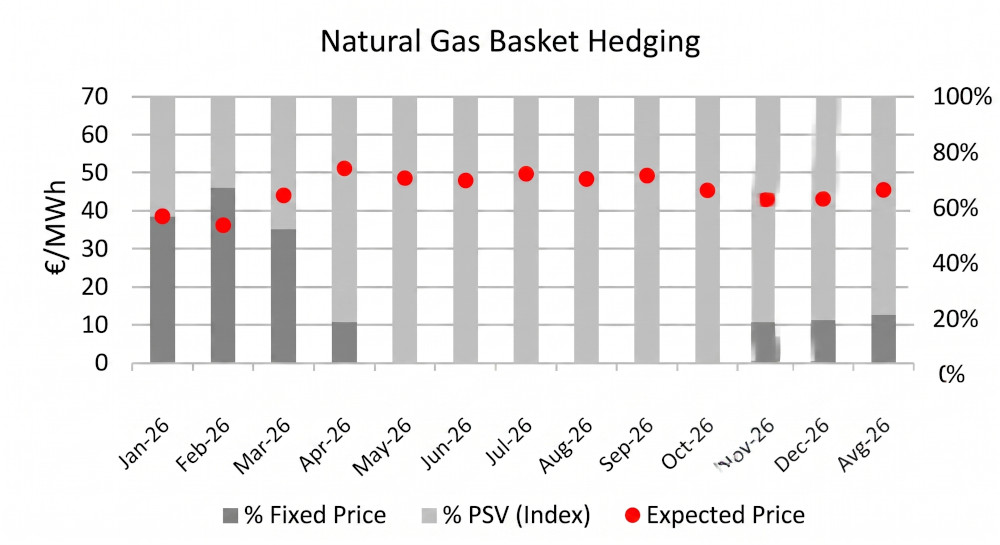
Volatility analysis and hedging
The fragility of the system is evident in the oscillation of hourly prices: on March 29, minimums of 7 €/MWh were hit, only to skyrocket to maximums near 280 €/MWh on the same day. To cope with this instability, purchasing strategies have become more prudent. At the national level, the natural gas basket is 50% hedged for the month of March, bringing protection for the entire Q1 to 55%. However, uncertainty remains high for the immediate future: coverage for April 2026 is currently stalled at 16%, exposing the system to further market risks.
The rise of the PUN is also supported by a seemingly counterintuitive phenomenon: despite an overall decline in electricity demand, there is a temporary reduction in the contribution of renewables (caused by unfavorable weather factors) and a simultaneous increase in net imports. This scenario exposes the fragility of current infrastructure limits and reinforces a crucial point: the energy transition cannot be solved simply by increasing production, but requires a revolution in grid integration and management.
2. Energy transition: slowdown or restart?
Before the current crisis, the global energy transition was going through a phase of slowdown. After a growth of +25% in 2024, the development rate of renewables fell to 8% in 2025. This figure raised questions about the sustainability of the path taken.
The causes are multifaceted: permitting issues, infrastructure shortages, rising raw material costs, and difficulties in grid management. However, the new energy crisis could represent a turning point.
Historically, every oil crisis has generated an acceleration of energy innovation. In the 1970s, for example, the first energy efficiency policies were developed and the foundations for modern renewable energy were laid. Today, the context is even more favorable: the technologies exist, costs are falling, and regulatory pressure is increasing.
3. The contradictions of the crisis: between a return to coal and technological innovation
One of the most complex aspects of the current situation is the coexistence of opposing dynamics. On the one hand, some countries are temporarily returning to coal to compensate for the gas shortage, especially in Asia and partly even in Europe. This represents a step backward from an environmental point of view, but a pragmatic choice in terms of energy security.
On the other hand, new investment trends are emerging forcefully. Among these, energy storage, particularly batteries, is establishing itself as one of the key technologies of the future. It is no coincidence that it is being called the new “black gold.”
Energy storage allows for the decoupling of production and consumption, reducing dependence on fossil fuels and stabilizing electricity prices. Furthermore, in an unstable geopolitical context, decentralized grids based on storage prove to be more resilient and less vulnerable to interruptions or attacks.
4. The raw materials knot: a challenge for the transition
An often underestimated element concerns the impact of the crisis on the supply chains of the energy transition. The Middle East, for example, accounts for about 9% of world primary aluminum production, a fundamental material for building renewable infrastructure. Production disruptions are generating an estimated deficit of between 3 and 3.5 million tons in 2026, with a consequent price increase of up to 3,500 dollars per ton. This phenomenon risks slowing down the development of new plants and increasing the overall costs of the transition.
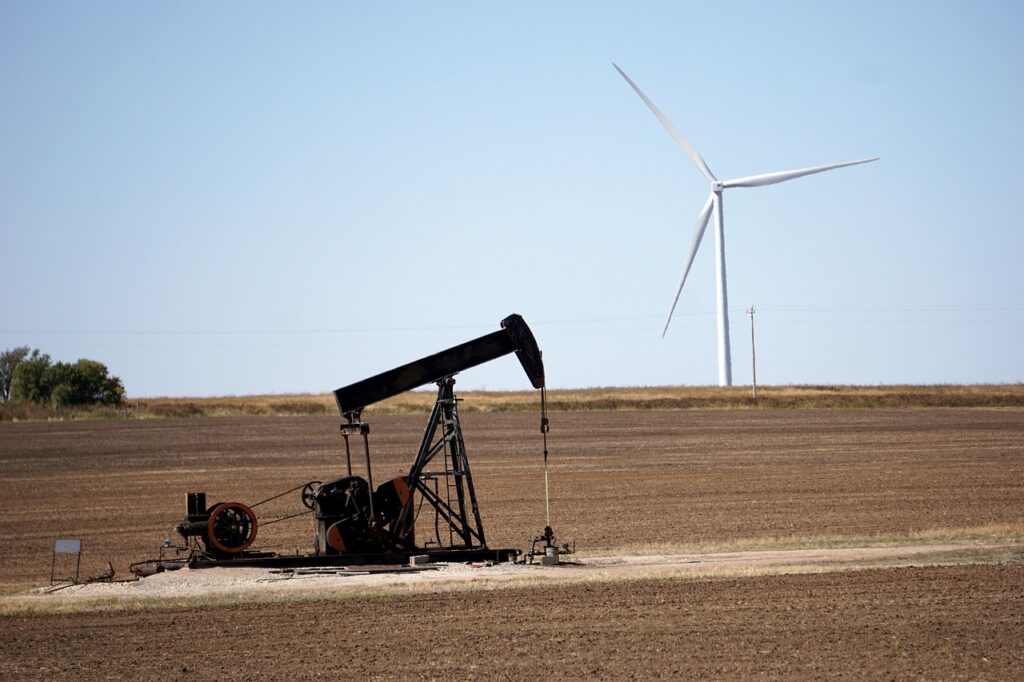
While the cost of energy (with a PUN at 143.40 €/MWh) puts pressure on industrial margins, the rising cost of raw materials such as aluminum creates a “perfect storm” for those who must build the transition infrastructure.
In other words, the current crisis does not only strike the traditional energy system, but also attacks the material foundations of the new paradigm. It is here that the need for a systemic approach emerges, capable of integrating technological innovation, supply chain security, and economic sustainability.
5. Power grids: the true battlefield of the transition
If energy production represents the visible side of the transition, power grids constitute its invisible but fundamental infrastructure. Without an adequate grid, even the most advanced renewable capacity remains unused.
The increasing electrification of consumption, combined with the spread of intermittent sources, requires smarter, more flexible, and resilient grids. In this scenario, technologies such as Dynamic Line Rating (DLR), IoT integration, and artificial intelligence are revolutionizing energy transmission management.
But at the heart of this transformation remains an element often taken for granted: the electrical conductor. Its ability to transport energy in an efficient, safe, and sustainable manner is crucial for the success of the transition.
6. The strategic role of De Angeli Prodotti’s advanced conductors
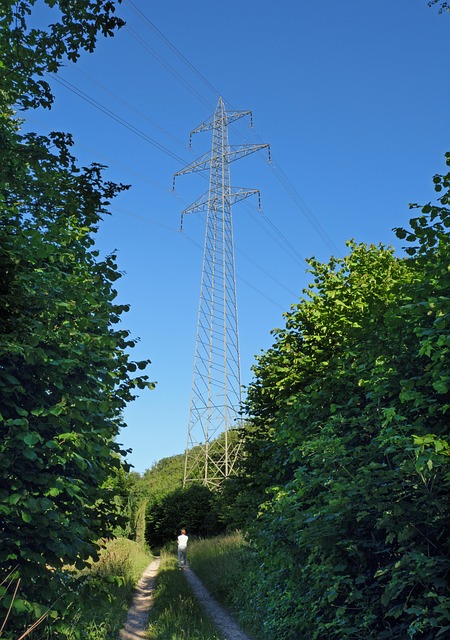
In a context characterized by price volatility, geopolitical instability, and growing energy demand, infrastructure efficiency becomes a decisive competitive factor. De Angeli Prodotti positions itself as a strategic technological partner in this scenario, thanks to the development of advanced solutions for energy transmission and distribution.
High-performance power line conductors represent a key element for:
- increasing the carrying capacity of existing lines without the need for new infrastructure;
- reducing energy losses along the grid;
- improving system resilience under stress conditions;
- supporting the integration of distributed renewable sources.
In particular, the adoption of innovative materials and advanced technologies allows for addressing some of the main critical issues of the transition: grid congestion, production variability, and the need for operational flexibility. In a scenario where every megawatt counts, the optimization of infrastructure becomes an essential priority.
7. Towards a new energy paradigm: resilience, decentralization, and digitalization
The oil crisis is accelerating a paradigm shift. The energy system of the future will be characterized by three key elements:
- Resilience, to cope with geopolitical and climatic shocks;
- Decentralization, with a wider spread of distributed plants and storage systems;
- Digitalization, to optimize grid management and improve overall efficiency.
In this context, the distinction between production, transmission, and consumption tends to blur, giving rise to an integrated and dynamic energy ecosystem. Companies that are able to interpret this transformation will not only survive but will lead the change.
8. Conclusion: from crisis to opportunity
The 2026 oil crisis is not simply a negative event to be managed, but an accelerator of transformations already underway. Like every crisis, it brings both risks and opportunities. On one hand, critical issues emerge regarding costs, supply chains, and energy security. On the other, spaces open up for innovation, investment, and technological development.
The energy transition will not be linear, but it is inevitable. And it will be precisely the ability to face current complexities that determines future success.
In this scenario, industrial players like De Angeli Prodotti play a fundamental role, contributing to building the infrastructure on which the energy system of tomorrow will be based.