De Angeli Prodotti’s commitment to sustainability is rooted in concrete actions: energy efficiency, material recovery, and the empowerment of our people. Discover our journey toward transparency and continuous improvement—a path also detailed in our inaugural Sustainability Report for FY24/25.
The energy transition lies at the heart of our business: every day, we develop conductors that help make electrical grids more efficient, facilitate the integration of renewable energy, and improve the performance of electrical machinery. But for us, sustainability also means examining how we work, the resources we use, the people who contribute to our growth, and the impact of our choices. It is a commitment to sustainability that we have pursued for years, through investments and incremental improvements, and one that we now aim to make increasingly measurable and transparent.
Summary:
- 1. Sustainability begins with what we do
- 2. Investing in the energy efficiency of our factory
- 3. A responsibility that encompasses materials, processes, and people
- 4. Our first Sustainability Report: learning to measure in order to keep improving
1. Sustainability begins with what we do
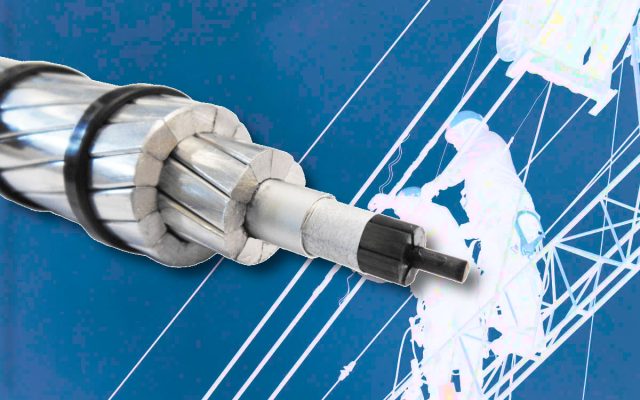
Our contribution to the energy transition stems, first and foremost, from the products we manufacture. Overhead line conductors, winding wires, and solutions for transformers and electric mobility are essential technologies for a more efficient and modern energy system.
For thirty years, we have been investing in research and development to improve the performance of conductors and meet the evolving needs of the energy sector. Over time, we have also broadened our focus to include the environmental impact of the materials we use, for instance, by introducing DAP CARE (Carbon Reduced Emissions), our range of products manufactured using low-carbon raw materials with a high recycled content.
For us, therefore, innovation and sustainability are not two separate paths. They are part of the same industrial strategy: developing technologically advanced solutions while remaining focused on resource efficiency and the evolving environmental needs of our clients.
2. Investing in the energy efficiency of our factory
An industrial operation like ours requires significant amounts of energy. For this reason, we have long been investing in technologies that allow us to manage it more efficiently and reduce our reliance on the power grid.
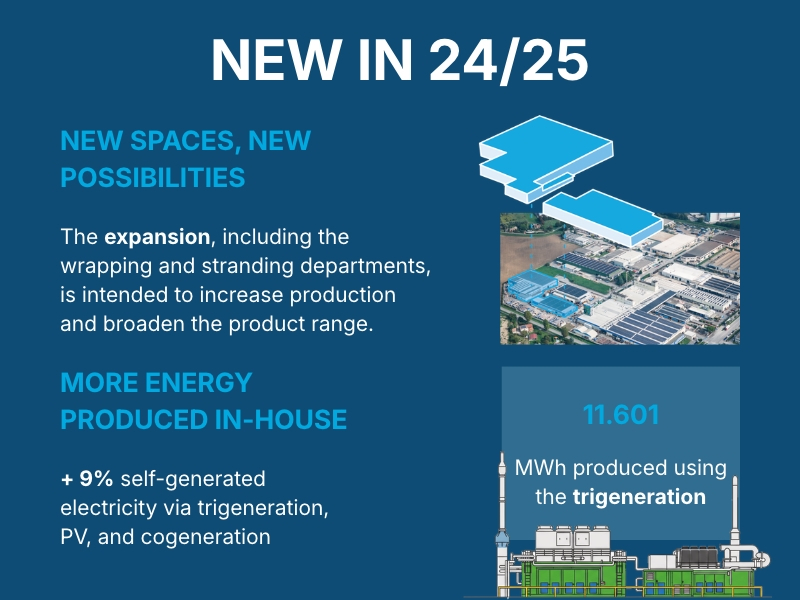
Our journey toward self-producing energy began in 2011 with the installation of our first photovoltaic panels. Over the years, we have progressively developed an integrated system that includes cogeneration, trigeneration, and photovoltaic power generation facilities. In 2025, we also expanded our solar capacity across the company’s rooftops.
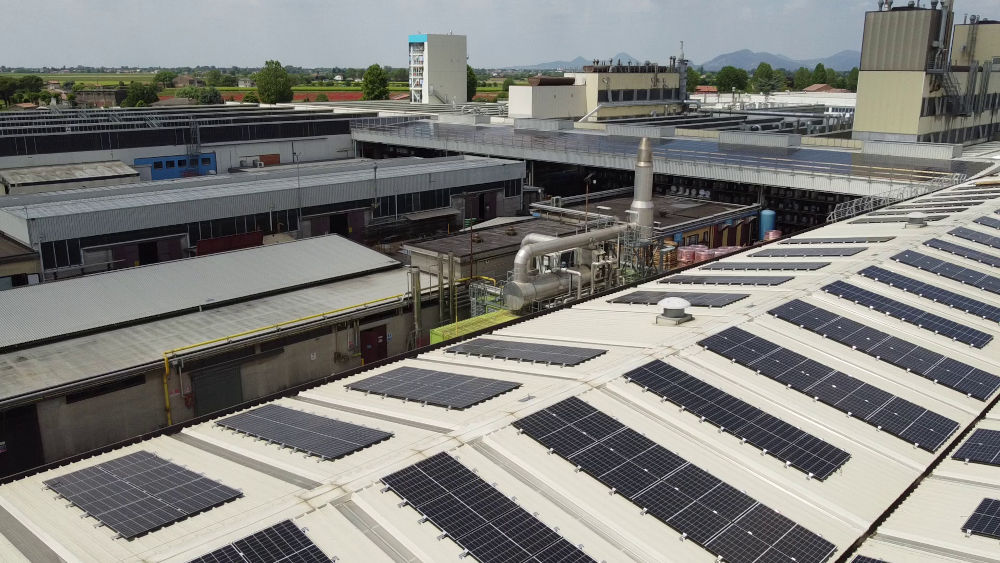
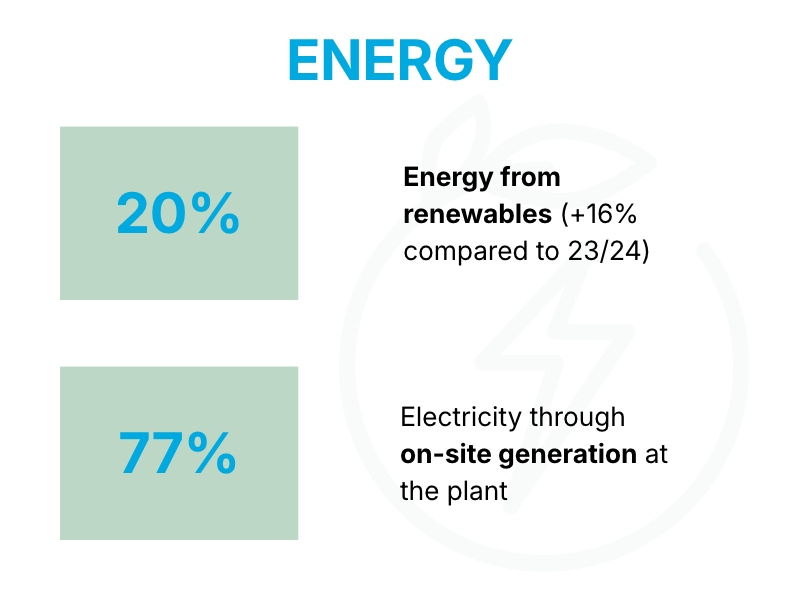
These investments have made it possible, in the 2024/25 financial year, to achieve 77% self-production of the electricity consumed, thanks to a mix of technologies that also includes systems powered by natural gas (cogeneration and trigeneration units).
Our goal is not to stop at the results already achieved, but to continue improving process efficiency, integrating renewable energy sources, and precisely monitoring consumption and emissions.
3. A responsibility that encompasses materials, processes, and people
Industrial sustainability is also built through decisions that are less visible, yet equally important: how we manage production waste, how much we invest in people’s skills, and how we organize continuous improvement.
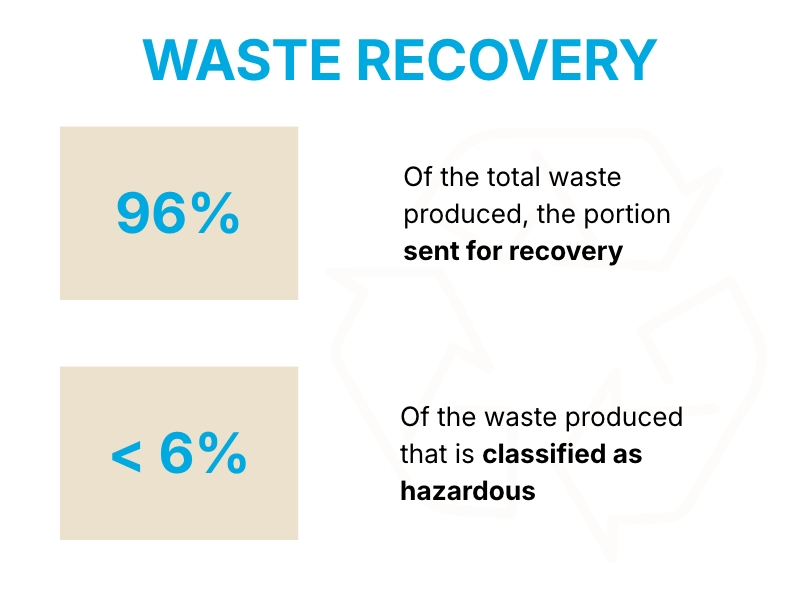
The recovery and repurposing of materials is a concrete example. Copper and aluminum are valuable resources; thanks to a structured system for separating and managing waste, we sent 96% of the waste generated in FY24/25 for recovery. This achievement reflects a long-standing commitment, one that we intend to both maintain and improve.
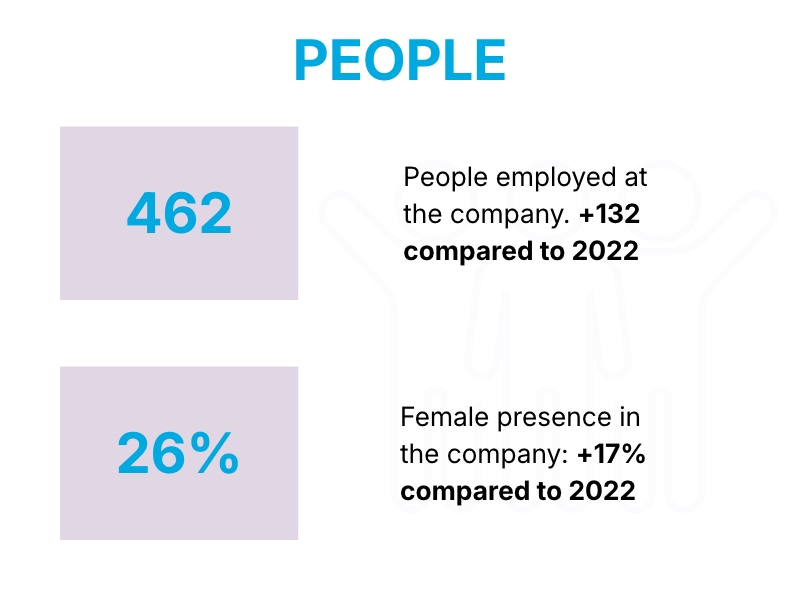
Alongside the environment, there are people. Safety, training, inclusion, and the development of skills are all part of our corporate culture. In the 2024/25 financial year, we provided a total of 5.701 hours of training, engaging our team in the development of technical and organizational skills.
Because a factory can only become more sustainable if the people who work there actively participate in the change.
Sustainability in a nutshell
Some summary data from the 2024/2025 Sustainability Report
4. Our first Sustainability Report: learning to measure in order to keep improving
Our first Sustainability Report, covering the 2024/25 fiscal year, is part of this journey.
We do not view this as an end point, nor as a document created merely to recount what we have done. Its preparation served, above all, as an important opportunity for internal growth, a genuine training ground that allowed us to involve various corporate functions, gather and organize information, identify the most meaningful indicators, and gain a better understanding of where to focus our improvement efforts.
Measuring also means recognizing the results achieved, identifying areas for improvement, and taking responsibility for tracking their evolution over time. This is how we define transparency: not as a mere statement, but as an ongoing process, grounded in verifiable data and concrete objectives.
The FY24/25 report therefore represents the first step in a structured and ongoing reporting process. We are already working on its evolution and plan to publish a new Sustainability Report for the 2025/26 financial year in the first quarter of 2027, with the goal of progressively aligning our reporting with applicable standards and regulatory requirements.
Because the value of sustainability lies not just in the results we can share today, but in the ability to measure, compare, and improve them tomorrow.
Would you like to learn more about our sustainability journey?
Fill out the form!
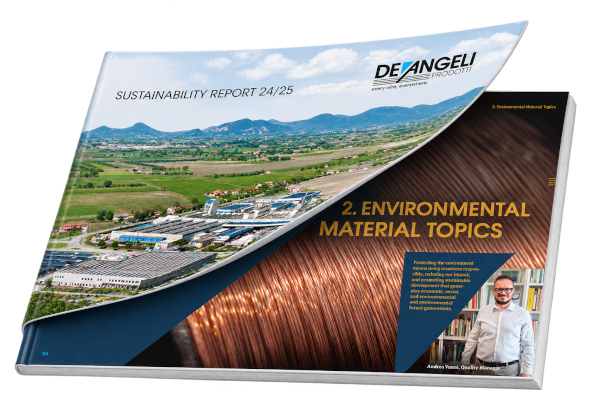
The FY24/25 Sustainability Report gathers the data, initiatives, and objectives that define our commitment across environmental, social, and economic areas.
Fill out the form below to request the full document and learn more about De Angeli Prodotti’s sustainability journey.